
Custom Development to Production: How ALYYO Simplifies Handbag Product Development

Updated: Aug 21
A handbag may start as a simple idea, but turning it into a production ready product requires careful planning. Shape, structure, hardware, materials, lining, and details all play a role.
That’s where custom handbag development comes in. From design interpretation and pattern making to material sourcing, sampling, revisions, costing, and production setup, the right manufacturing partner helps bring your concept to life.
ALYYO supports the full development process, creating a more direct path from creative idea to manufactured collection.

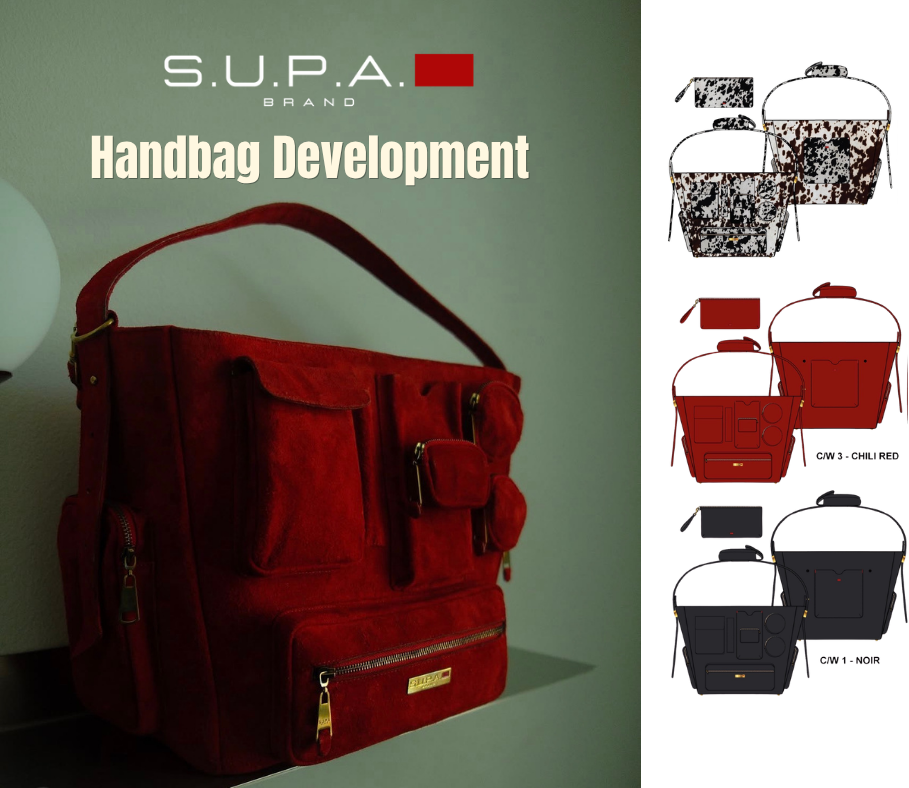
Product development and manufacturing are different stages
Many designers use the terms development and manufacturing as if they mean the same thing. They do not.
Product development is the process of turning an idea into a workable, repeatable product. This stage answers practical questions.
Can the shape hold its structure?
Does the strap length feel right on the body?
Will the closure function smoothly?
Can the material support the construction?
Is the design realistic at the target price point?
Manufacturing begins once the product has already been developed and approved. At that stage, the factory follows confirmed patterns, materials, specifications, and construction standards to produce the order.
This distinction matters because a manufacturer cannot accurately price or produce a handbag based only on a sketch. A sketch may show the mood and proportions, but it does not define seam allowances, reinforcements, hardware sizes, lining construction, edge finishing, or assembly sequence.
A serious handbag prototype solves those questions before production money is committed.
Product development
Creates the technical foundation for the bag through design review, pattern making, sampling, revisions, sourcing, and costing.
Manufacturing
Produces the approved design at scale using confirmed specs, materials, construction methods, and quality standards.
ALYYO’s role is to connect each stage of development so the product stays clear and consistent from concept to sample to production.
We can begin with a hand sketch, digital rendering, reference sample, mood board, written concept, existing style, or full collection plan.
The process starts with understanding the intended shape, function, customer, price point, materials, and construction. From there, we determine what needs to be engineered for production.
A structured tote may require reinforcement, while a mini crossbody needs precise hardware placement. Convertible straps require strong attachment points, and structured satchels may need hidden support to maintain their shape.
ALYYO’s goal is not to change the designer’s vision, but to make it manufacturable, cost-aware, and consistent for production.
We also identify technical requirements such as custom molds, hardware, or specialty materials early, helping prevent costly changes later in development.
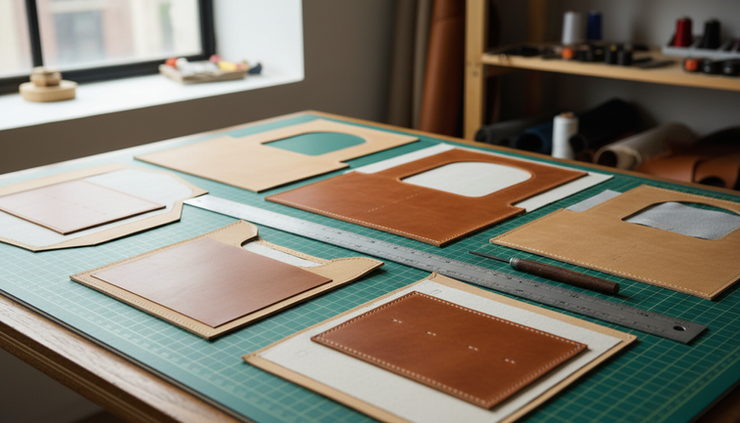
A handbag tech pack is the technical blueprint for development and production. It translates the designer’s vision into clear instructions for the factory, covering dimensions, construction, materials, components, and finishing.
A strong handbag tech pack typically includes:
• Technical views and finished measurements
• Material and hardware specifications
• Stitching and construction details
• Edge finishing and interior layouts
• Logo, label, and colorway details
• Bill of materials
• Packaging and quality requirements
Your tech pack does not need to be perfect before contacting ALYYO. Designers can start with sketches, partial documentation, or an existing sample they want to improve. ALYYO can help develop or refine the technical package as part of the development process.
Most importantly, the tech pack should always reflect the **approved sample**. When the prototype changes, the technical documentation needs to change with it to prevent outdated information from reaching production.
Pattern making and prototype development prove the design
Pattern making is where the handbag design becomes a physical product. The pattern maker translates the concept into individual pieces while accounting for material thickness, seam allowance, structure, stitching, reinforcement, and hardware placement.
This stage often reveals details that are difficult to see in a sketch. A pocket may need adjusting, a gusset may need reshaping, or a flap may require additional structure to hold its form.
Once the pattern is complete, the first handbag prototype is created. The initial sample may require revisions, and that is part of the development process. Sampling allows the team to test the design, identify issues, and refine the product before moving into production.
During handbag sampling, ALYYO reviews:
• Overall proportion and carry comfort
• Opening, closure, and interior function
• Handle and strap balance
• Material behavior and hardware placement
• Edge quality and stitch consistency
• Production feasibility
Revisions are a normal part of development. A prototype may need a longer strap, wider gusset, different lining, or additional reinforcement. Each change is documented and reflected in the next sample.
The number of revisions depends on the design’s complexity and how prepared the product information is. A simple pouch may move quickly, while a structured handbag with custom hardware and multiple compartments requires more development. ALYYO approaches each revision with a production mindset, ensuring improvements enhance the final product without adding unnecessary complexity.


Sourcing, revisions, development costs, and MOQ shape the final plan
Materials and hardware directly impact a handbag’s quality, construction, MOQ, and cost. Leather, vegan leather, canvas, nylon, suede, and specialty fabrics all require different production methods. Hardware such as zippers, clasps, chains, and closures also affects cost, especially when custom components are required.
Handbag development may include pattern making, sampling, material and hardware sourcing, revisions, tech pack updates, and pre-production preparation. These development costs are separate from bulk production.
MOQ and production pricing depend on the final design, materials, hardware, construction, and order quantity. Simple styles using stock materials may offer more flexibility, while complex designs or custom components may require higher minimums.
ALYYO recommends establishing a target price early so design and material decisions stay aligned with your production goals.
Full package manufacturing keeps the process controlled
A full package manufacturing partner connects development, pattern making, sourcing, sampling, costing, and production in one process. This helps prevent miscommunication between separate vendors and keeps the design consistent from concept to production.
With ALYYO, the process can include:
• Concept and construction review
• Technical specifications and pattern development
• Sampling and revisions
• Material, lining, trim, and hardware sourcing
• Production costing
• Bulk manufacturing coordination
By connecting these stages, ALYYO gives designers one streamlined path from original concept to finished production.
Handbags are strategically efficient compared to apparel
Handbags offer a key advantage over apparel: they typically do not require traditional size grading.
Instead of managing multiple sizes, brands can create variety through color, materials, hardware, and a few size options such as mini, medium, and large.
This can mean:
• Simpler product development
• Fewer SKUs and less inventory complexity
• More focused production planning
• Greater control over materials and trims
• More investment in quality and design details
Handbags still require precision and skilled construction, but their lack of traditional sizing can make them an efficient category for growing brands.
A well-developed handbag can also become a signature product, evolving across seasons through new colors, materials, and refinements while maintaining a consistent production foundation.

Serious development creates better production
The strongest handbag collections are developed, not rushed. The concept is clarified, patterns are engineered, prototypes are tested, materials are sourced, and costs are reviewed before production begins.
Working with an experienced handbag manufacturer makes the process more predictable while helping balance creative vision, quality, and commercial goals.
ALYYO connects handbag development, pattern making, sampling, sourcing, and manufacturing in one streamlined process, helping designers move from original concept to market ready product with less friction.


Comments